Frost and Bowing Basement Walls in Iowa
Short answer: wet soil, winter frost and decades of pressure push block basement walls inward. Catching it early, while the wall has only moved a little, keeps the fix simpler.
Request a foundation inspectionThe pressure outside
Soil beside a basement wall gets heavy when it's wet and swells when it freezes. Each winter adds a little more push against the wall.
Block versus poured
Block walls are built from many small units with mortar joints, so they bend more easily than a single poured wall.
The tell-tale crack
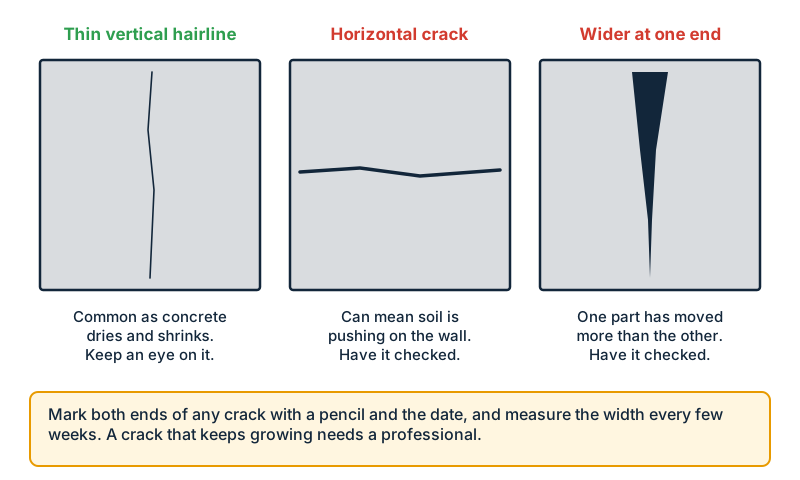
A horizontal crack around the middle of the wall, or a wall that looks curved along its length, is the classic sign.
Measure it
Hang a string line or hold a long level against the wall. Note how far it leans and check again next season.
Lower the load
Keep downspouts well away, regrade soil so it slopes out, and avoid piling snow against the foundation.
Don't dig
Never dig a trench beside a bowing wall to relieve pressure yourself. The wall can move suddenly.
Repair choices
Steel beams, wall anchors and carbon fiber are the common fixes, depending on how far the wall has moved.
After the fix
Repaired walls should be checked over time. Ask what monitoring the contractor recommends.
Next
See bowing basement wall repair.
More foundation repair guides
Request a foundation inspection
Bowing basement walls, new cracks, water on the floor after a storm. Tell us what you're seeing and we'll pass it straight to a foundation contractor, who will call you to set up an inspection and quote.
- Basement walls, cracks and slabs
- Des Moines, Grimes, Norwalk, Indianola and nearby
- Inspection and quote before any work
Bowing wall, cracks or a wet basement?
Send a request and a foundation contractor will get in touch. Requests answered 7 days a week.
Prefer email? [email protected]